
African judicial officers reaffirm commitment to delivering climate justice
Senior judicial officers from Africa have resolved to utilize legislative tools as a means to strengthen action on the climate crisis devastating the continent.

The judicial officers said in a communique issued Wednesday at the end of a three-day symposium held in the Kenyan capital of Nairobi that they will be on the frontline of promoting Africa's green transition, by leveraging progressive policies, laws, and public education.
Kenya hosted the Third Regional Symposium on Greening Judiciaries in Africa under the theme "Strengthening the Role of Judiciaries in Addressing Climate Change in Africa."
Among the delegates who participated in the symposium were chief justices and their deputies, judges, magistrates, heads of judiciary training institutions, researchers, and green campaigners from the sub-Saharan African region.
Kenyan Deputy President Rigathi Gachagua, in his remarks during the closing ceremony of the forum, underscored the critical role of African judiciaries in strengthening climate response.
"A robust judicial system is key to countering the threats posed by climate change in our continent. We, therefore, count on the judiciary to issue precedence-setting judgments that protect communities on the frontline of the climate crisis," Gachagua said.
He added that African judiciaries should utilize local and global legislative instruments which seek to compensate victims of climate disasters while obliging industries to limit the emission of planet-heating gases like carbon dioxide and methane.
During the symposium, the judicial officers shared knowledge and best practices that would revitalize action on the climate crisis that is taking a heavier toll on the continent's vulnerable communities.
Chief Justice and President of the Supreme Court of Kenya Martha Koome said judicial officers, in their resolution, pledged to play a proactive role in supporting national and transboundary efforts aimed at promoting climate resilience.
Koome added that as custodians of the rule of law, Africa's judges and magistrates have an obligation to enforce legislation that protects women, children, youth, persons with disabilities, herders, and subsistence farmers from the ravages of climate change.
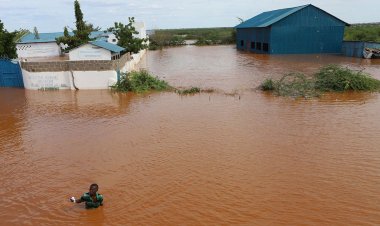
In their joint communique issued at the end of the symposium, the judicial officers pledged fidelity to the constitution, supreme laws, statutes, and international conventions in their bid to deliver justice to communities battered by climate disasters, including droughts, floods, cyclones, and wildfires.